
History
Establishment
EGST was jointly founded in 1997 by the Ethiopian Evangelical Church Mekane Yesus (EECMY) Ethiopian Kale Heywet Church (EKHC), the and the Evangelical Churches Fellowship of Ethiopia (ECFE). Together, they represent virtually of the Protestant evangelical churches in Ethiopia at large. This joint ownership is an excellent example of partnership and cooperation in Ethiopia and beyond by bringing ecumenical diversity into unity. EGST is registered in Ethiopia by Ethiopian council of Gospel Believers’ churches (ECGBC)by the registration No. SD01-/2012 to serve church and society with the objectives of Teaching, Research and community outreach services in Ethiopia and beyond.
EGST is fully accredited by the Association for Christian Theological Education in Africa (ACTEA) which recognizes the relevance and teaching standards of EGST’s programmes as well as the overall administrative Resources of the school. In order to further strengthen its standards and improve its efficiency and effectiveness, EGST is further partnering with reputable international universities and research institutions.
Governance and Management
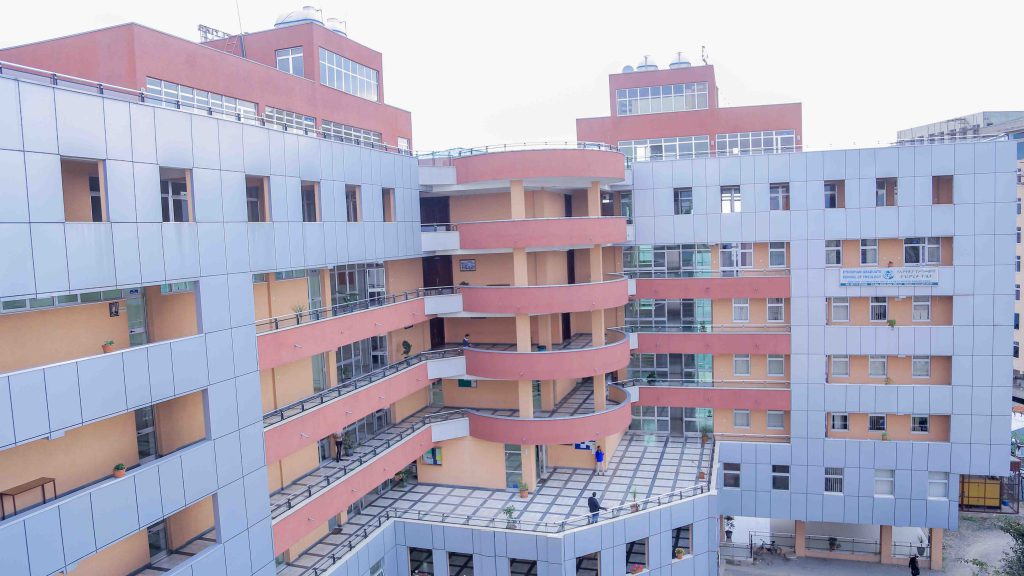
EGST is governed by a constitution and bylaws and overseen by the Council of Owners and Board comprised of EECMY (40%), EKHC (40%) and ECFE (20%), to whom the administration of EGST is fully accountable.
Day-to-day academic and administrative management is under the Acadamic commision and Administration Council chaired by the President. The main administration units are headed up by the Department heads.
EGST has had four directors: Dr Peter Cotterell, former Principal of London School of Theology and EGST’s founding director from 1997 to 1999. He was succeeded by Rev Dr Debela Birri who retired at the end of 2007. Succession passed to Dr Desta Heliso who completed his term at the end of 2015 and was succeeded by Dr Misgana Mathewos in January 2016 and in 2024 Dr. Worku H/mariam took over the journey.
The founding vision was born within the Mekane Yesus Seminary (MYS) of EECMY and the Evangelical Theological College (ETC) of EKHC, but the growing need for contextually relevant and affordable graduate level theological education in Ethiopia was perceived within all evangelical churches in the country. So the involvement of the Evangelical Churches Fellowship of Ethiopia (ECFE) was deemed essential in order to facilitate the sharing of the school by the other evangelical churches of Ethiopia. The leaders believed that the constitutional right to freedom of religion and the remarkable growth of churches in Ethiopia provided an unprecedented opportunity to impact society through leadership and scholarship that are creative, biblical, contextually relevant and thoroughly informed by a transforming vision of God’s purpose in and for the world. It was this vision that led to the establishment of EGST and which continues to drive EGST forward today.
1996
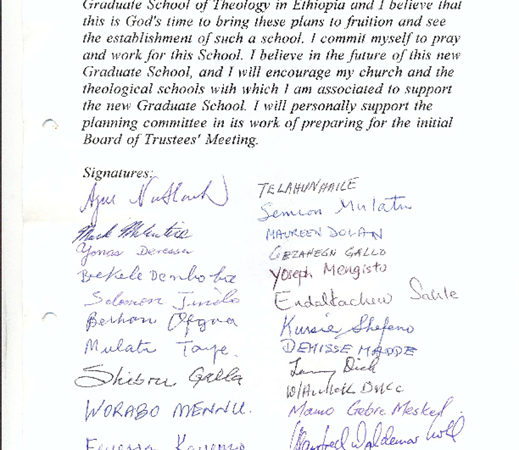
On June 17, 1996, 29 leaders representing the Mekane Yesus Seminary, the Evangelical Theological College and the Evangelical Churches Fellowship of Ethiopia signed commitment towards the establishment of a graduate school of theology.
1997
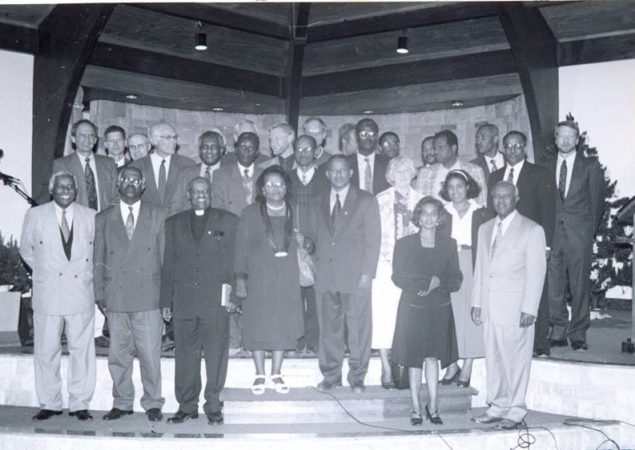
The first post graduate theological institution in the Horn of Africa, the Ethiopian Graduate School of Theology, was dedicated on 14 February 1997.
1997
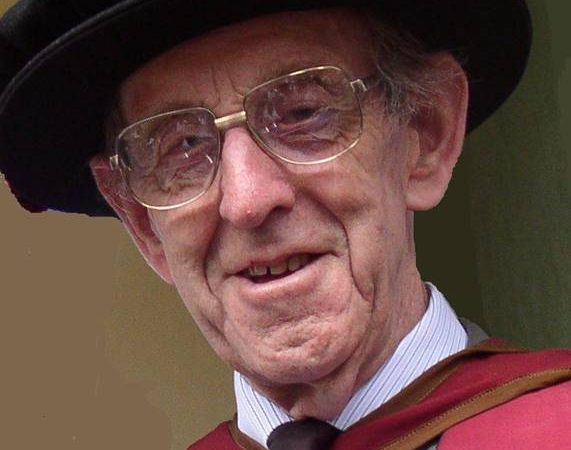
The founding director, Dr. Peter Cotterell was appointed in May, 1997.
1998
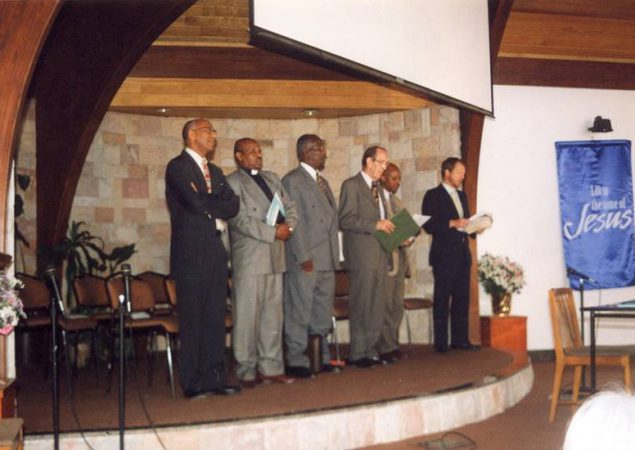
On 14 February 1998, EGST was officially dedicated as a joint Graduate School of Theology.
Dr. Peter Cotterell, the founding director, emphasized the uniqueness and wonder of the spirit of cooperation and unity between the two major evangelical denominations in Ethiopia and their respective undergraduate theological colleges, that allowed EGST to rise up and be a symbol of how much more can be achieved together than alone.
2000
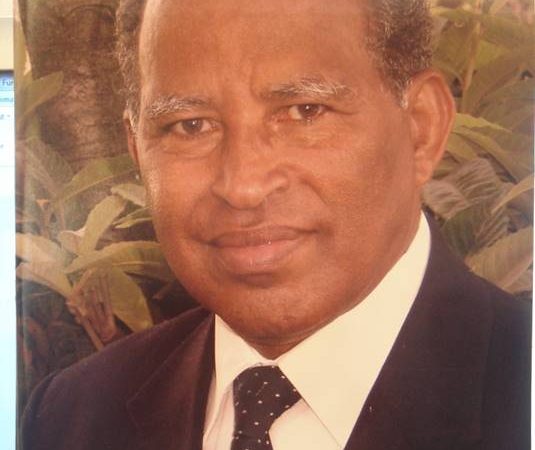
In 2000, Reverend Dr. Debela Birri, was installed as the second director of EGST. His time of directorship, 2000 – 2007, is generally referred to as a period of establishment and organization of EGST.
2001
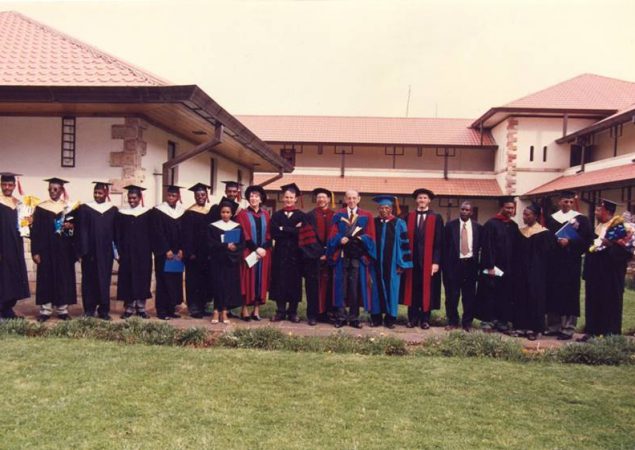
Having started with 15 students by offering courses in systematic theology in 1998, EGST graduated its first batch in June 2001. A total of 12 students graduated – six in Master of Arts in Biblical and Theological Studies and six in Master of Theology.

2003
EGST dedicated its first campus together with the third graduation in June 2003. before owning its own campus, EGST operated in rented offices and classes were being held at ETC and MYTS.
2007
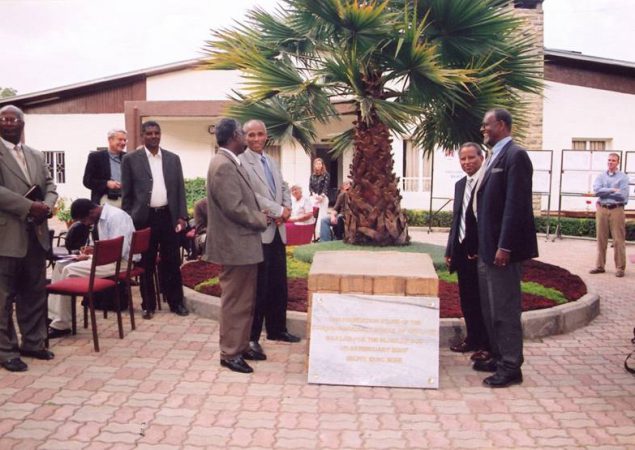
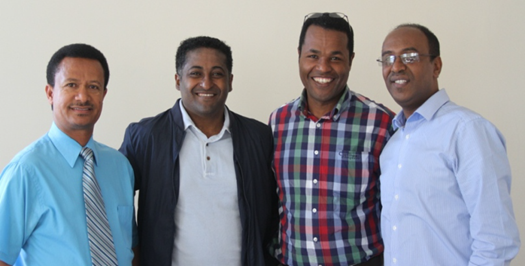
The Ground breaking of the Phase I building project.
2007
The first Faculty Development Plan was launched to realize 70% Ethiopian teaching staff in 10 years.
2008
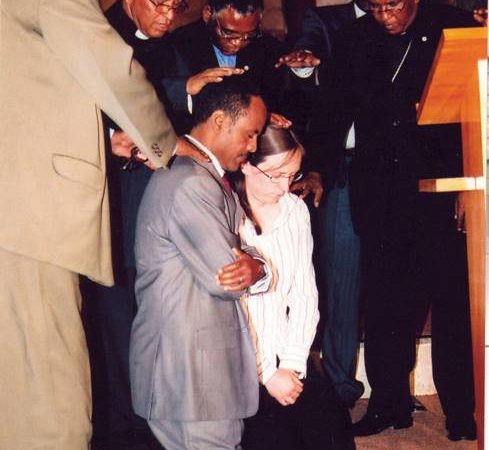
On 1 January 2008, Dr. Desta Heliso was installed as the third director of EGST.
2009
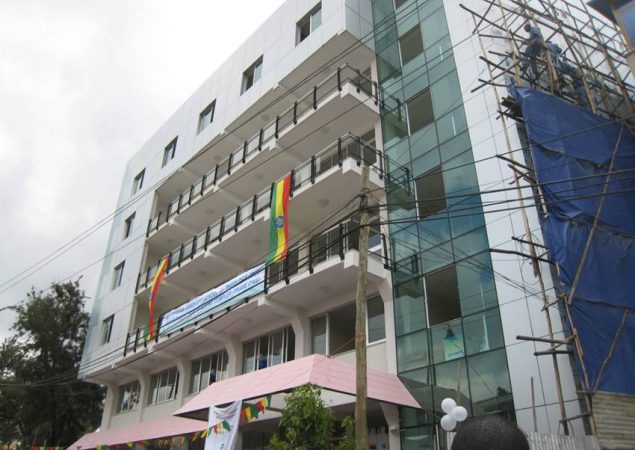
The Phase I Campus Development was inaugurated.
2010
EGST got fully accredited by the Association for Christian Theological Education in Africa (ACTEA)
EGST accredited by ACTEA
2012
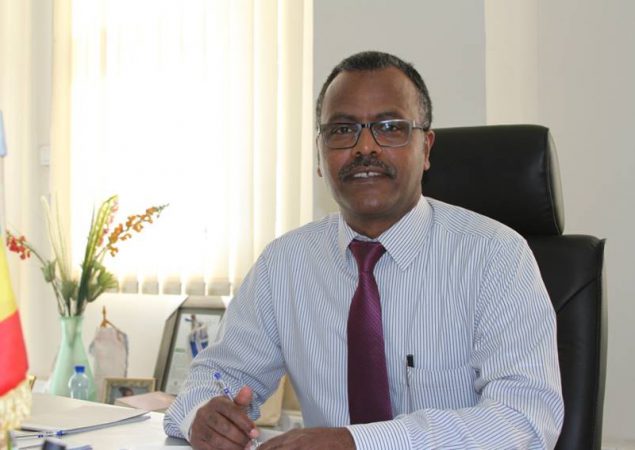
Dr. Desta Heliso got re-installed for second term of second term of directorship
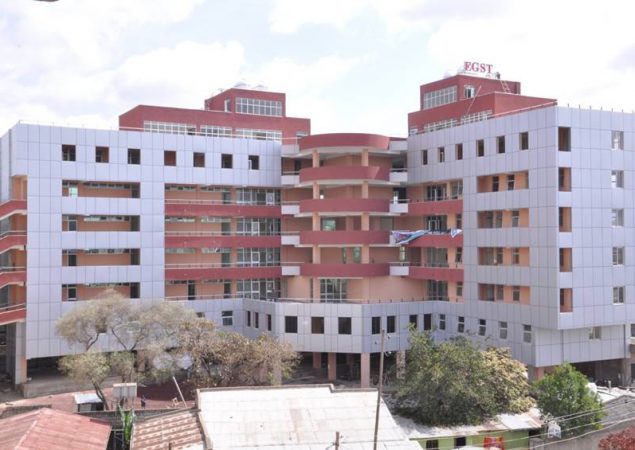
2014
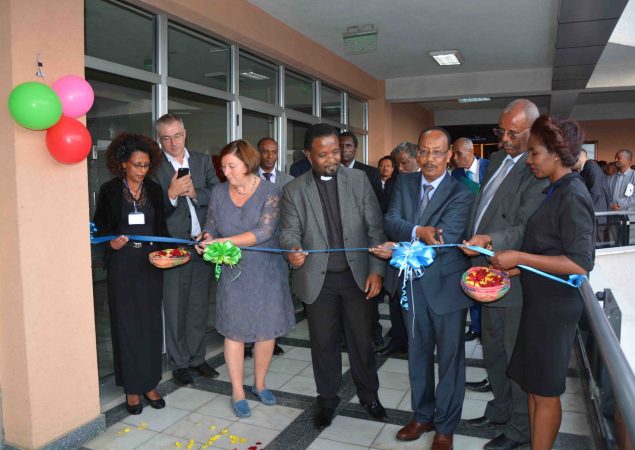
The Phase II Campus Development building was inaugurated and dedicated on 14 March 2014.
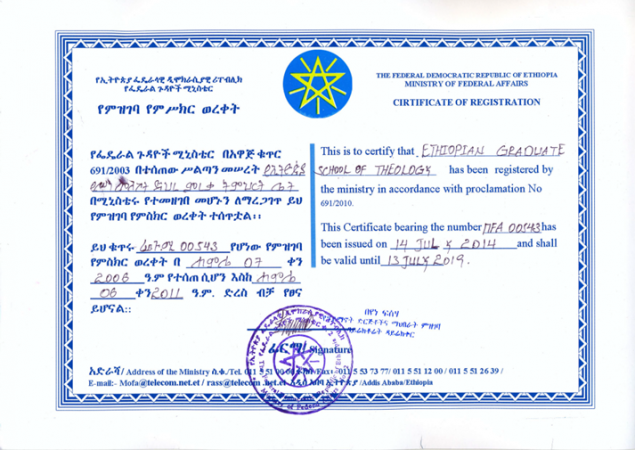
2014
In August 2014, EGST acquired legal registration from the Ministry of Federal Affairs.
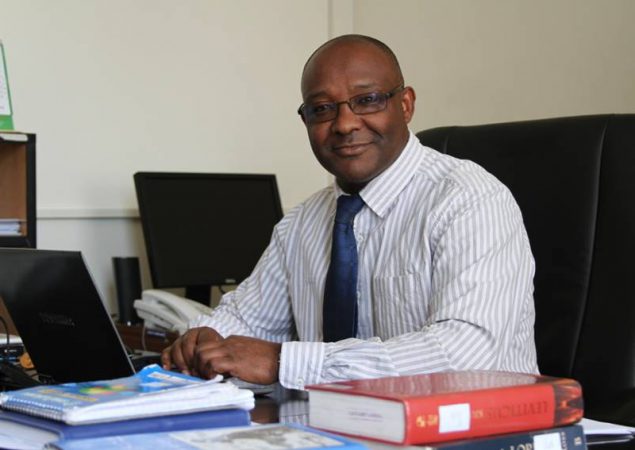
2015
Dr. Misgana Mathewos was installed as the fourth director of EGST.
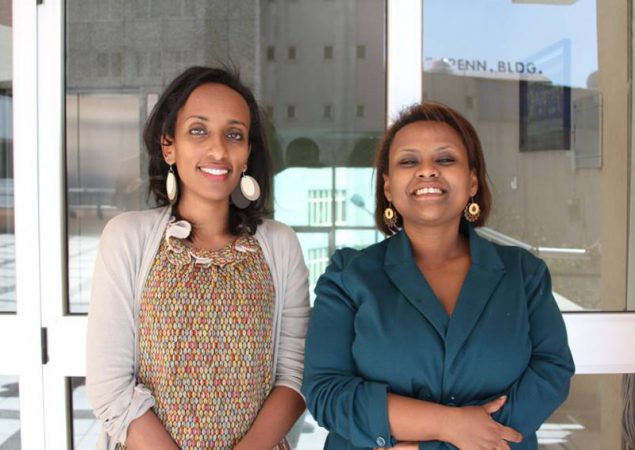
2016
Two of the Female Faculty Development Plan Candidates, Sofanit Tamene and Meron Tekleberhan, went for PhD.
2017
On 7 October 2017, the EGST-VU joint PhD Programme was launched.
The President's Message
Welcome to our Research and Study Center, where “we work out our salvation with fear and trembling” (Philippians 2:12) and worship God through relentless learning, debate, and critically interrogating our answers—refining our thinking, teaching, and ways of life to serve as faithful stewards and agents of transformation in our churches, society, and beyond. Jointly founded by the Ethiopian Evangelical Church Mekane Yesus (EECMY), the Ethiopian Kale Heywet Church (EKHC), and the Evangelical Churches Fellowship of Ethiopia (ECFE), EGST stands as an interdenominational and international institution dedicated to equipping Christ-like women and men through theological and related studies and stimulating research for stronger churches and a transformed society.
As a learning community, we at EGST humbly gather under the Lordship of God to fearlessly seek holistic knowledge, profound wisdom, and transformative truth, challenging superficial values and everyday norms. Through the years, God has faithfully guided, provided, and sustained our institution, investing in His image bearers as co-laborers in His mission.
Again, I warmly invite you to join us on this exciting journey of faith, learning, and transformation taking place as we shape our present reality and build a future that reflects God’s reign of grace and truth.
Worku H Mohammed, PhD

EGST’s vision is to become an institution of academic and research excellence towards stronger churches and transformed society.
EGST is a Christian institution that exists to equip Christ-like women and men through theological and related studies and to stimulate research for the service of Church and society in Ethiopia and beyond.
The main objectives of EGST are:
- To train and equip committed and Christ-like servant leaders, who will impact both church and society
- To equip theological educators for degree and diploma granting training institutions,
- To develop Christian educators, who will facilitate training programmes within churches and organizations,
- To train those who will engage in pastoral and/or practical ministry in wider church and societal contexts,
- To offer courses in areas of missions,
- To develop persons in areas of leadership, management, stewardship, development and related fields in connection with theology,
- To enable students to initiate, design, manage, implement and evaluate projects through establishing community engagement practicum projects,
- To be a research center for studies for local and international scholars in different fields of religions.
We seek to subject our thoughts and actions to God’s Word and affirm the power of Scripture to effect change in individual lives, churches and society.
We come together as a community of learners not for our sake only but also for the sake of others. We seek to grow in our understanding of God and his ways, so that we may help others to acknowledge his governance over the world with its rich possibilities for both individual transformation and for social and cultural renewal.
We believe that theological education speaks to and out of its local context as a dynamic interaction between the local context, the global context and Scripture.
We strongly believe that unity among the churches of Ethiopia is important and can be fostered through cooperative, inter-denominational graduate-level theological education. We also seek to partner with individuals, institutions, churches and organizations within and outside Ethiopia.
We value learning alongside people from different traditions and churches. Exposure to varying traditions challenges thinking about God and the diversity of his work in the world. While EGST promotes unity, it also appreciates and respects diversity.
We value the importance of worshipping God with our minds and strive for excellence both in our rigorous study of Scripture and in our critical analysis of context.
We seek to be people who model Christ’s values such as love, humility, compassion, justice, integrity, self-control, and holiness.
We seek to promote ecumenical relationships among churches in Ethiopia in order to enhance mutual understanding.
The main focus areas of EGST are teaching, research and practical engagement. Our academic programmes include:
Post-Graduate Diploma in Biblical and Theological Studies (PGD),
Master of Arts in Biblical and Theological Studies (MABTS),
Master of Arts in Leadership and Management (MALM),
Master of Arts in Development Studies with specialized areas in and Gender, Health and Theology(GHT), and Community Development and Theology (CDT), and
Master of Arts in Peace and Sustainable Development (MADevS).
Master of Theology (MTh).
In 2017, EGST launched its PhD programmes jointly with the Vrije Universities of Amsterdam (VUA).
In its research activities EGST coordinates and conducts various research projects in different field of studies and relating to issues relevant to the Ethiopian context. EGST also hosts the leading annual Frumentius Lectures, monthly Academic seminars, Public seminars. EGST further runs community engagement projects on Health, social protection, Gender, Environmental stewardship, peace and related Ecclesiastical and societal problems within its Academic teaching and research effort.